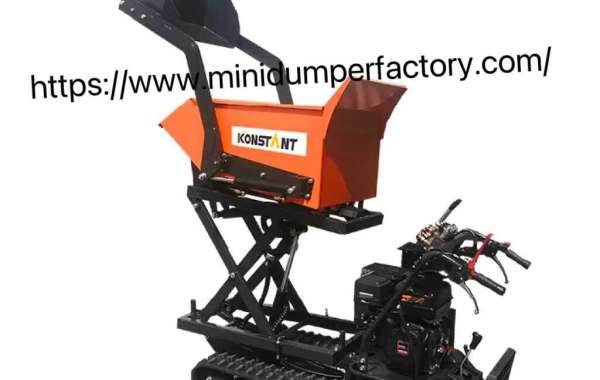
Power Barrow purchasing decisions should begin with the actual work that needs to be completed, not simply the figures shown in a product catalogue. Construction companies, landscaping contractors, farm operators, and equipment distributors may have different requirements for transporting soil, gravel, bricks, concrete waste, or garden materials. As a manufacturer, minidumperfactory encourages buyers to evaluate the working environment and expected tasks before selecting a suitable configuration.
Match Carrying Capacity With the Materials
Carrying capacity is an important specification, but buyers should consider the weight and volume of their usual materials together. Sand, gravel, wet soil, and broken concrete can create a different load from leaves, mulch, or other lightweight materials.
For dense materials, the rated payload needs to accommodate the expected weight without exceeding the permitted operating limit. For bulky materials, hopper volume may become equally important because the container can reach its physical capacity before reaching its weight limit.
Buyers should consider the following questions:
What materials will be transported regularly?
How much material is moved during a typical working day?
How many trips are expected per hour?
Does the hopper provide enough usable space?
Are there different load requirements across projects?
A realistic estimate helps buyers avoid choosing a configuration that does not fit their daily workload.
Measure the Working Route Before Selecting a Model
A machine may have suitable carrying capacity but still be difficult to use if it cannot pass through the available access points. Narrow gates, building entrances, garden paths, temporary walkways, and storage areas can all affect equipment selection.
Before requesting a quotation, measure the narrowest passage and check the space available for turning. Buyers should also consider the overall length and width of the machine, including the hopper and other external components.
Ground conditions deserve similar attention. Firm concrete, loose gravel, muddy soil, and uneven ground place different demands on the drive system. Wheeled configurations may suit firm surfaces, while tracked designs can be considered for applications requiring traction across softer or irregular ground.
The selected model should be assessed against the entire route, from the loading position to the unloading point.
Compare Engine Options With Daily Operating Conditions
The engine configuration influences operating arrangements, maintenance tasks, and the environments in which equipment can be used.
Buyers should consider whether the machine will work outdoors, indoors, or across mixed locations. Fuel-powered configurations may suit outdoor projects requiring extended operation and access to refueling facilities. Electric options may be relevant where noise, ventilation, or local operating requirements influence the decision.
Other points deserve attention as well:
Available operating hours per working day
Refueling or charging arrangements
Access to routine service components
Operator familiarity with the controls
Local requirements for equipment use
Instead of selecting an engine configuration based on one specification, compare it with the working schedule and available facilities.
Examine the Hopper and Unloading Design
The container affects how materials are loaded, carried, and discharged. Its shape, dimensions, side height, and opening arrangement should match the materials and unloading location.
For example, loose sand and gravel may leave a hopper differently from wet soil or sticky construction waste. Buyers should therefore ask how the unloading mechanism works and whether the discharge position suits their projects.
Manual tipping may be suitable for certain lighter applications, while hydraulic tipping can be considered when repeated unloading or heavier loads are part of the daily routine.
It is also useful to check the hinge area, locking arrangement, control position, and required clearance during discharge. These details help operators understand how the machine fits into the material handling process.
Review Stability, Braking, and Operator Controls
Operating conditions can change throughout a project. A route may include gentle slopes, uneven surfaces, tight turns, or areas where workers and other equipment are moving nearby.
Buyers should examine the braking arrangement, steering method, speed control, and operator position. The machine should provide clear operating instructions and allow users to understand how movement and unloading functions are controlled.
Load distribution also matters. Materials should be placed evenly within the permitted loading area, and operators should follow the stated capacity and slope restrictions. Buyers should request the relevant operating manual and review the manufacturer's instructions before putting equipment into service.
For businesses purchasing several units, operator training materials can also support consistent daily procedures.
Check Maintenance Access and Replacement Components
Routine maintenance affects how equipment can be managed throughout its service life. Before ordering, buyers should ask which parts require regular inspection and how easily these components can be accessed.
Useful items to review include engine or motor components, drive parts, tires or tracks, hydraulic connections, filters, and fasteners. The maintenance schedule should identify inspection intervals and the recommended service procedures.
Distributors and rental companies may also want a spare parts list with component names or identification numbers. This information helps their teams organize replacement stock and respond to customer service requests.
A clear parts ordering process is especially useful when equipment is distributed across different regions.
Confirm Specifications Before Placing an Order
Once a suitable configuration has been identified, buyers should request a written specification covering the model, rated payload, dimensions, engine system, hopper arrangement, accessories, and agreed options.
For customized orders, confirm exterior color, logo placement, labeling, packaging, and documentation before production starts. If the order includes several configurations, each version should be listed separately to prevent misunderstandings.
Buyers can also request product photographs, inspection records, operating information, and packaging details according to their purchasing requirements. These materials provide a shared reference for reviewing the order before shipment.For construction equipment distributors, importers, and contractors planning upcoming projects, minidumperfactory provides product information to support model comparison and purchasing discussions. Review the available configurations at https://www.minidumperfactory.com/ and prepare your application details before requesting a quotation.