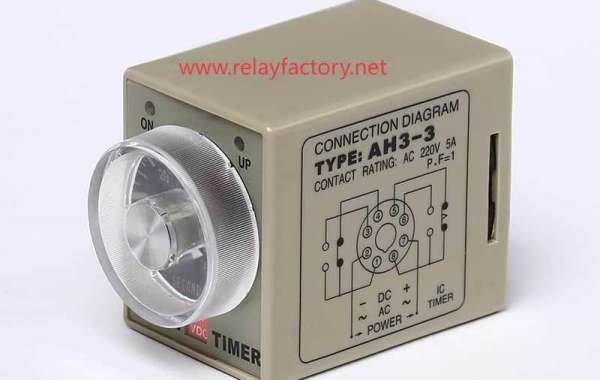
Custom Time Relay purchasing requires buyers to consider how a component will connect with their equipment and perform within an existing control circuit. Different machines may have specific electrical requirements, installation limitations, and operating sequences. Before requesting a quotation, purchasing teams should prepare technical drawings, explain the intended application, and identify the functions required. Asking the right questions helps manufacturers evaluate the project and prepare a product proposal based on actual requirements.
What Control Sequence Should the Product Support?
Buyers should begin by explaining the operating sequence of their equipment. Some applications require a delayed start, while others need a temporary output, repeated switching, or a controlled shutdown process.
A simple description of the machine operation can help the manufacturer understand when the output should activate and how long it should remain in a particular state. Buyers can also provide a control circuit diagram to illustrate the relationship between the component and other electrical parts.
If several operating modes are involved, list each mode separately. This makes it easier to identify the required functions and determine whether one configuration can support the intended application.
Which Electrical Parameters Need Confirmation?
Electrical specifications should be discussed before the product configuration is finalized. Buyers should provide input voltage, frequency, output contact ratings, connection requirements, and the characteristics of the controlled load.
The contact arrangement also needs attention. Depending on the circuit, the equipment may require normally open contacts, normally closed contacts, or changeover contacts. Buyers should explain how these connections will be used rather than relying only on general product descriptions.
It is also helpful to confirm terminal types, wiring positions, insulation requirements, and other relevant electrical conditions. If the component must comply with particular market or equipment standards, communicate those requirements during the initial discussion.
Can the Dimensions Match Your Equipment Layout?
Installation space can affect the selection of electrical components. Buyers should measure the available area and provide relevant information about panel dimensions, mounting positions, wiring clearance, and surrounding components.
Ask whether the housing, mounting method, terminal position, or external structure can be adjusted. If the product needs to replace an existing component, provide its dimensional drawing and connection information.
Buyers should also consider accessibility. A component that is difficult to install or remove may create additional work during equipment maintenance. Discussing these practical details early can help the manufacturer evaluate the proposed structure.
What Environmental Conditions Should Be Considered?
The operating environment may influence product configuration and material requirements. Buyers should explain whether the equipment is used in a factory, control cabinet, commercial facility, or outdoor installation.
Relevant conditions may include ambient temperature, humidity, vibration, dust exposure, and expected operating frequency. These details help the manufacturer assess whether the proposed product arrangement is suitable for the intended working environment.
If the equipment operates continuously or experiences frequent switching, provide the expected operating pattern. Specific information is more useful than a general description of industrial application.
How Should Buyers Evaluate Samples?
Sample evaluation gives buyers an opportunity to check whether the proposed product meets their technical requirements before arranging larger orders.
Before requesting samples, agree on the inspection criteria. These may include electrical connections, switching response, functional operation, dimensional compatibility, and appearance. The inspection method should reflect the actual application rather than relying on a general checklist.
Buyers should also ask how test results will be recorded and how any identified issues will be handled. If an adjustment is required, clarify whether a revised sample will be provided for another evaluation.
A written approval record can help both parties maintain consistent specifications when the project moves into production.
Which Customization Details Affect the Order?
Customization may involve more than the main electrical function. Depending on the project, buyers may need changes to housing dimensions, terminal arrangements, labels, markings, packaging, or product identification.
Ask the manufacturer which options are available and whether any requested changes affect development costs, minimum order quantities, or delivery schedules. The quotation should clearly identify the included specifications and any additional charges.
For equipment manufacturers and distributors, packaging and labeling may also be important. Confirm whether individual packaging, product identification, instruction documents, and batch information are required.
How Can Buyers Organize Long-Term Cooperation?
A purchasing decision should consider the manufacturer's communication and order management arrangements. Buyers can ask who will handle technical questions, how design changes are approved, and how production progress is communicated.
It is also useful to discuss repeat-order arrangements, specification records, inspection documents, and the handling of future product revisions. Keeping approved drawings and test information organized can simplify communication when the same component is ordered again.For businesses seeking customized electrical components, relayfactory offers an opportunity to discuss application requirements, product configurations, and manufacturing arrangements. Buyers can visit https://www.relayfactory.net/ to review the available product range and contact the manufacturer with drawings, electrical specifications, and project details for further discussion.