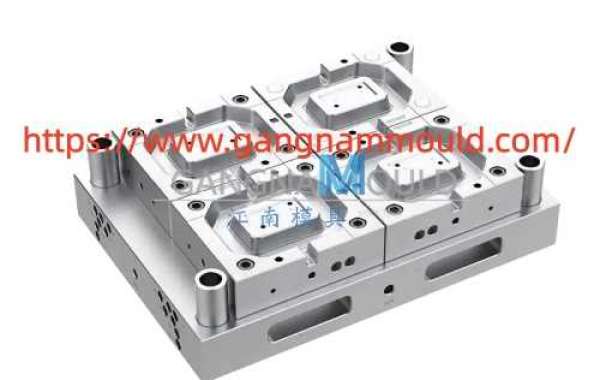
Packaging Box Injection Mould development begins with an important decision: selecting a suitable plastic material for the intended application. Different products have different requirements for strength, flexibility, transparency, chemical resistance, and appearance. A storage container used in a household has different demands from a protective case for electronic components or a food storage product. For manufacturers, understanding these differences helps establish practical product specifications before tooling development starts.
Polypropylene, commonly known as PP, is widely used in household products and reusable containers. It offers a useful combination of low density, flexibility, and resistance to many chemicals. Its ability to withstand repeated bending makes it suitable for certain products with snap-fit connections or hinged features. PP can also be considered for food-related applications when an appropriate grade and compliant formulation are selected. Manufacturers should evaluate its shrinkage characteristics during the design stage because these can influence dimensional accuracy and finished product appearance.
Polyethylene is another material worth considering, particularly for products that require impact resistance and moisture protection. High-density polyethylene, or HDPE, is commonly used in storage containers, industrial crates, and household products. Its characteristics make it suitable for applications where products may experience regular handling or contact with moisture. Low-density polyethylene has greater flexibility and is often used in applications that require softer material behavior. The choice between different grades should depend on the expected loading conditions, product structure, and operating environment.
For products that require a transparent appearance, polyethylene terephthalate, known as PET, may be considered. It is commonly associated with clear consumer containers and food-related applications. Transparency allows users to see the contents without opening the container, which can be useful in retail displays and household storage. However, designers need to consider the required clarity, wall thickness, impact conditions, and processing characteristics before selecting a specific grade.
Polystyrene is another option for certain consumer and retail applications. General-purpose polystyrene can provide a clear appearance, while high-impact polystyrene is modified to improve impact behavior. These materials may be considered for display cases, lightweight organizers, and selected household products. Their suitability depends on the expected mechanical demands and exposure conditions. If a product will experience repeated impacts or outdoor use, alternative resin options may deserve further evaluation.
ABS is frequently considered for products that need a combination of rigidity, surface appearance, and impact resistance. It is used in electronic housings, appliance components, and consumer products. Its surface characteristics can support different finishing requirements, including textured appearances and selected decorative treatments. For manufacturers developing protective cases or equipment organizers, ABS may be worth evaluating when dimensional stability and appearance are important project considerations.
Material selection should never depend on price alone. Buyers need to consider the actual working environment, expected product lifespan, manufacturing quantity, and required appearance. For example, a container used in a warehouse may need resistance to repeated handling, while a retail display product may place greater emphasis on transparency and surface finish. Products intended for food contact also require additional attention to regulatory compliance. In the United States, food contact substances must have an applicable authorization for their intended use. A general statement that a resin is suitable for food applications does not automatically establish compliance for every formulation or use condition.
The selected resin also influences tooling development. Different plastics have different melt flow characteristics, shrinkage rates, and cooling requirements. These properties affect gate positioning, runner arrangements, cavity dimensions, and cooling channel design. If the material shrinks unevenly during cooling, the finished component may develop dimensional differences or surface deformation. Engineers therefore need to consider resin specifications alongside the product geometry instead of treating material selection and tooling development as separate decisions.
Wall thickness is another detail that deserves attention. Excessively thick sections may increase cooling time and contribute to sink marks, while very thin sections may create filling difficulties. A balanced structure can help improve material flow and dimensional consistency. Rounded corners, suitable draft angles, and carefully arranged ribs can also support easier production and product release. These details are particularly relevant for customized designs with complicated internal structures.
Before confirming a large manufacturing order, buyers should request sample evaluation. Dimensional measurements, surface inspections, fitting tests, and practical use assessments can help identify potential problems. If the product will contain food, contact compliance should also be verified for the specific resin grade, additives, and intended conditions. Clear technical communication between the buyer and manufacturer can reduce misunderstandings during development.
Gangnammould provides plastic tooling development and manufacturing services for different consumer and industrial applications. Its project support can involve product structure assessment, resin selection discussions, customized design requirements, and sample development. Whether a customer is planning a household organizer, a retail container, or a protective case, communicating the intended application helps establish suitable manufacturing specifications. Businesses interested in customized tooling and related products can visit https://www.gangnammould.com/product/ to review Gangnammould product information and discuss their project requirements.