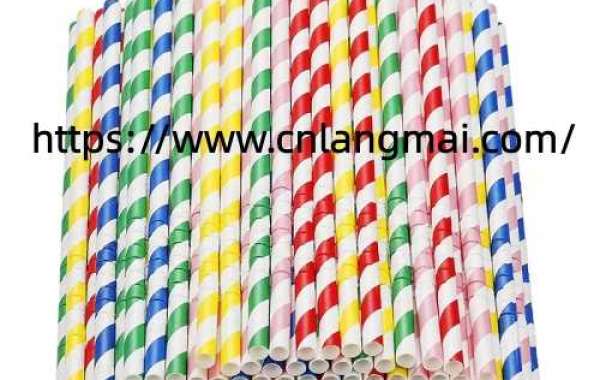
Bendable Paper Straws are worth considering when beverage businesses want drinking accessories that can adjust to different drinking positions and serving situations. Their flexible section provides an alternative to conventional straight designs, allowing users to change the drinking angle without repositioning the entire cup. For cafes, restaurants, hotels, and beverage distributors, selecting a suitable product involves more than checking its appearance. Material quality, joint construction, flexibility, moisture resistance, and overall dimensions all deserve attention before placing a wholesale order.
One important feature is the structure of the flexible section. Unlike a regular cylindrical tube, a flexible design usually includes a series of small folds or corrugations near one end. These sections allow the product to change direction while maintaining a passage for liquid. The arrangement, depth, and spacing of the folds can influence how easily the product bends.
Buyers should consider whether the joint can move smoothly without becoming excessively compressed. If the folded section is too loose, it may struggle to maintain its intended position. If it is too rigid, users may find it difficult to adjust the drinking angle. Manufacturers need to consider these factors during production and evaluate the finished design through practical testing.
Material construction is another important consideration. Drinking accessories made from cellulose based materials generally use multiple layers bonded together to create a tubular structure. The choice of material weight, layer arrangement, adhesive, and production process can influence stiffness and flexibility.
A suitable structure should allow the flexible section to move while keeping the remaining body sufficiently firm for normal handling. Buyers should also pay attention to the connection between the joint and the main tube. Poor bonding or uneven forming may affect the appearance and structural consistency of the finished product.
Moisture resistance deserves particular attention because these products are intended for contact with beverages. When exposed to liquid, cellulose fibers can absorb moisture, which may influence the strength and shape of the material. The performance of different products can vary according to their composition and surface treatment.
For this reason, buyers should request samples and test them with the beverages they intend to serve. Testing with cold water, juice, milk tea, and other common drinks can provide useful information about how the material behaves during use. The time spent in contact with liquid should also reflect actual serving conditions. A product that performs well during a brief test may behave differently during longer use.
Dimensions are equally important when choosing a suitable design. Diameter determines the available passage for liquid, while overall length affects compatibility with different cup sizes. Small takeaway cups, large iced drinks, and restaurant beverage containers may require different specifications.
Businesses should measure their existing containers before discussing an order with a manufacturer. They should also consider how much space the flexible section occupies when adjusted. For beverage brands with several cup sizes, preparing a specification list can make product selection and inventory planning easier.
Another feature worth discussing is the surface finish. Smooth edges, consistent winding, and an even outer appearance contribute to convenient handling. The drinking end should be carefully processed to avoid rough or uneven edges. Buyers can inspect samples for visible adhesive marks, loose layers, irregular folds, and differences in diameter.
For commercial customers, appearance also plays a role in product presentation. Cafes and restaurants may prefer simple colors that coordinate with their cups and packaging, while beverage chains may want printed logos or customized patterns. Manufacturers can discuss available printing methods, color options, and individual packaging arrangements according to production capabilities.
Packaging should reflect the way products are stored and distributed. Individually wrapped units may suit takeaway counters and foodservice environments where staff prepare orders throughout the day. Bulk packaging may be more convenient for distributors and businesses purchasing larger quantities. Export buyers should also consider carton dimensions, package counts, labeling, and transportation arrangements.
Before confirming a wholesale order, purchasing teams should request information about minimum order quantities, production schedules, available specifications, and sample approval procedures. It is also useful to discuss food contact documentation and relevant requirements in the destination market. Clear communication helps both parties confirm the product details before manufacturing begins.
As a manufacturer, Langmai understands that different customers have different requirements for beverage accessories. Product dimensions, flexible joint structures, material combinations, printing preferences, and packaging formats can all be discussed when planning a customized order. Buyers should provide their intended application and expected quantities so that the manufacturing team can evaluate suitable specifications.
For cafes, distributors, and beverage brands planning new packaging projects, choosing the right design requires attention to both flexibility and everyday usability. Langmai welcomes customers to review available product options and discuss their purchasing requirements. Visit https://www.cnlangmai.com/product/ to view the product range and explore customization possibilities for your business. Matching product specifications with actual serving conditions can help create a more suitable purchasing plan.