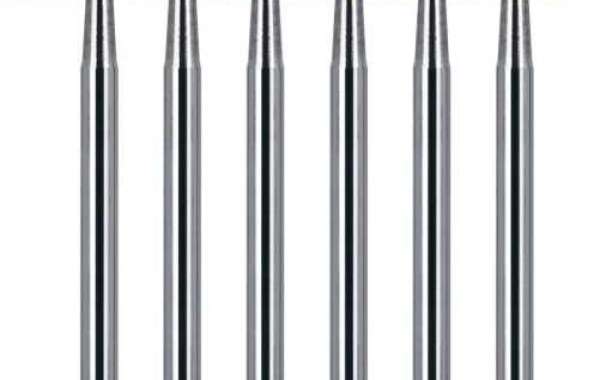
Long Shank Burs are designed for machining applications that require extended reach into recessed surfaces, deep cavities, and narrow working areas. For industrial buyers, selecting a suitable configuration involves more than checking the overall length. Head geometry, diameter, workpiece material, machine compatibility, and operating conditions all influence product suitability. Buyers who prepare these details before requesting a quotation can communicate their needs more clearly and reduce the risk of ordering an unsuitable specification.
Identify the Working Area
Before comparing products, determine where the cutting operation will take place. Some components contain internal corners, deep recesses, or narrow openings that limit access for standard-length designs. The required reach depends on the depth of the target area and the available clearance around it.
Measure the working depth and opening width carefully. Consider whether the cutting head must approach the surface at an angle or move around an internal contour. A product that reaches the required depth may still be unsuitable if its head cannot fit through the opening.
Providing a drawing, photograph, or sample dimensions can help the manufacturer understand the application. Clear reference information also makes it easier to confirm measurements before production begins.
Choose the Appropriate Head Shape
Different cutting head profiles serve different purposes. Cylindrical designs may suit certain flat surfaces and edges, while rounded profiles can be useful for curved contours. Tapered shapes may help with angled transitions or restricted spaces.
The correct choice depends on the workpiece geometry and the material that needs to be removed. Buyers should identify whether the task involves deburring, edge finishing, contour adjustment, or general material removal.
Head diameter and cutting length also deserve attention. A narrow opening may require a smaller diameter, while a broad surface may call for a different contact area. Comparing these details helps purchasing teams identify suitable configurations for their production processes.
Check Dimensions and Machine Compatibility
A product must fit the intended machine and its clamping system. Buyers should confirm the required diameter, total length, insertion depth, and compatible collet size before ordering.
Metric and imperial measurements should not be treated as interchangeable. For example, 6 mm and 1/4 inch represent different dimensions. Even a small mismatch can affect installation and operating stability.
It is useful to prepare a specification sheet containing the machine model, required dimensions, head profile, and intended application. For repeat purchases, retaining an approved specification can help maintain consistency across orders and simplify communication with the supplier.
Match the Product to the Workpiece Material
The material being processed affects the cutting configuration and operating conditions. Steel components, aluminum parts, castings, and other materials may require different cutting geometries to suit the task.
Buyers should explain the material grade when known and describe the expected result. Removing excess material from a rough edge may involve different requirements from finishing a detailed contour or preparing a surface for another manufacturing step.
Instead of assuming that one configuration suits every material, discuss the application with the manufacturer. For unfamiliar jobs, a controlled trial using the recommended operating procedure can help evaluate whether the selected product meets the practical requirements.
Review Operating Conditions and Safety
Correct handling is important when working in confined spaces. Excessive pressure, unsuitable rotational speed, poor clamping, or an unstable workpiece can cause vibration and affect the finish.
Operators should follow the manufacturer's instructions and use equipment within the specified operating range. The workpiece should be secured before machining, and the cutting head should not be forced into a restricted area. Buyers should also consider whether the operator can maintain a clear view of the working surface.
These precautions support controlled operation and help reduce unnecessary stress on the equipment. When the application involves unusual depths or difficult access, buyers can request technical guidance before finalizing the product selection.
Confirm Purchasing and Inspection Requirements
Technical specifications are only one part of the purchasing process. Buyers should also check minimum order quantities, packaging options, inspection arrangements, production schedules, and shipping terms.
For distributors, clear labeling helps distinguish similar products during storage and fulfillment. For manufacturing facilities, documented dimensions make incoming inspection and repeat ordering easier to manage.
If a customized configuration is required, send the manufacturer a drawing and confirm all critical measurements in writing. It is also useful to agree on how specification changes will be handled after order approval. These steps help both parties establish clear expectations before production starts.
For businesses sourcing products for deep cavities, narrow openings, and precision finishing tasks, carbidebursfactory can discuss application requirements, product dimensions, and order arrangements. Preparing the working depth, head profile, workpiece material, and expected quantity before requesting a quotation can make the process more efficient. Visit https://www.carbidebursfactory.com/ to review the available product range and contact the manufacturer about options suited to your production needs.