Makeup Brush Set Manufacturer selection is an important decision for beauty brands, wholesalers, and retailers preparing to develop or expand a cosmetic accessory range. A suitable production partner should understand the intended market, provide clear product specifications, and communicate practical options for customization. Buyers who assess these details before placing an order can make more informed sourcing decisions and reduce misunderstandings during production. Price matters, but the complete purchasing process deserves attention as well.
One useful starting point is to define the target customer. A beauty brand selling everyday cosmetics may need a compact collection with essential application tools, while a professional makeup supplier may prefer a broader assortment for foundation, powder, contouring, and eye makeup. Retail price, customer preferences, and sales channels all influence the appropriate configuration. Preparing a clear product brief helps a factory understand the project and suggest suitable arrangements without unnecessary changes later.
Material selection deserves careful consideration. Brush fibers can differ in softness, flexibility, density, and maintenance requirements. Synthetic fibers are commonly considered for liquid and cream cosmetics because they can be designed for different application needs and are generally straightforward to clean. Natural hair may appeal to certain buyers, depending on their product positioning and sourcing policies. Neither option should be selected by appearance alone. Buyers should request material details and samples to assess how the fibers perform with their intended cosmetic products.
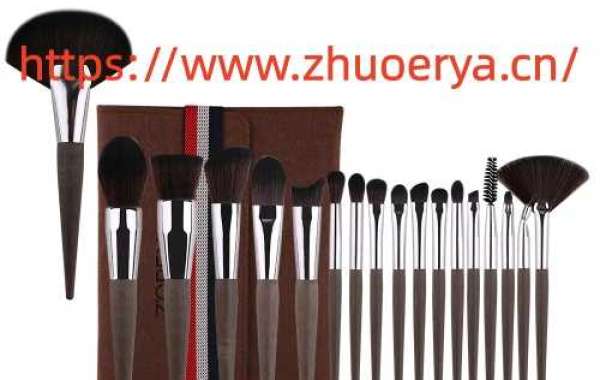
Construction is another practical checkpoint. Examine how securely the brush head connects to the handle, whether the ferrule feels stable, and whether the handle is comfortable to hold. Check for uneven trimming, loose fibers, visible adhesive, rough edges, and differences between samples. These observations can help buyers establish clear expectations for acceptable workmanship. If a project involves several brush shapes, ask whether each design can be evaluated individually rather than relying on one sample to represent the entire collection.
Customization can help a product range reflect a brand identity. Options may include logo printing, handle colors, fiber arrangements, brush shapes, pouch designs, and gift packaging. However, not every option is available for every design or order quantity. Buyers should confirm which features can be customized, whether setup charges apply, and how design approval works. Supplying artwork in an appropriate format and confirming logo dimensions early can also reduce the need for repeated revisions.
Packaging should match the intended sales channel. A retail collection may require an attractive display box, while an online seller may prioritize compact packing and protection during transportation. Buyers should check the packaging material, internal arrangement, product labeling, and carton dimensions. If the goods will be shipped internationally, it is also sensible to discuss packing standards and any labeling requirements relevant to the destination market. These details help connect product presentation with practical storage, shipping, and selling needs.
Production planning and communication are equally important. Ask about minimum order quantities, sample lead times, estimated production schedules, payment terms, and procedures for handling specification changes. Request written confirmation of the agreed materials, dimensions, colors, packaging, and quantities. Buyers should also clarify how inspection is arranged and what happens if delivered goods do not match approved specifications. Clear documentation gives both parties a shared reference throughout the order process.
Cost comparisons should consider the full quotation rather than the unit price alone. Sampling, logo preparation, packaging, transportation, and import-related expenses may affect the final budget. When comparing suppliers, use the same product specifications and order quantities wherever possible. This makes it easier to identify differences between quotations and understand which services are included. A low initial quote may not cover every requirement, so asking detailed questions can help avoid unexpected expenses.
For businesses planning a new cosmetic accessory collection, Z'OREYA offers a product range to review when considering designs, set configurations, and branding requirements. Before requesting a quotation, prepare your preferred brush styles, material expectations, target order quantity, logo files, packaging ideas, and delivery destination. You can review the available products at https://www.zhuoerya.cn/product/ and use the product information as a starting point for discussing specifications and customization needs. A clear brief and careful evaluation can help your business develop a collection that suits its market and purchasing plans.