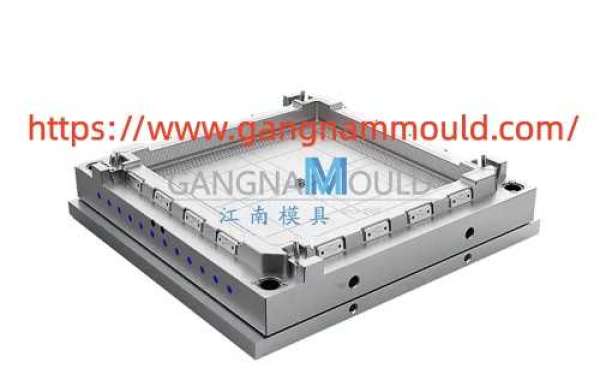
Daily Necessities Mold projects depend on careful material selection because the chosen resin affects product strength, surface appearance, processing stability, and manufacturing expenses. For manufacturers producing household containers, kitchen accessories, buckets, storage boxes, and bathroom items, material decisions need to match the intended application. A practical selection process begins with understanding how the finished product will be handled, cleaned, stored, transported, and used throughout its expected service life.
Different household products have different performance requirements. A lightweight container may need flexibility and resistance to ordinary handling, while a storage box intended for stacking may require greater stiffness and dimensional stability. Kitchen accessories may involve repeated washing or contact with particular substances, making chemical resistance and relevant regulatory requirements important considerations. Choosing resin according to actual operating conditions helps manufacturers avoid unnecessary material costs while keeping product functions in focus.
Polypropylene, commonly called PP, is frequently used in consumer goods because of its low density, moisture resistance, and processing characteristics. It can suit a range of containers, organizers, household accessories, and other injection molded products. Polyethylene may be considered for applications requiring particular combinations of flexibility and impact resistance, while ABS can be useful when a product calls for stiffness and a specific surface appearance. These materials have different properties, so the appropriate choice depends on the design, grade, and intended environment.
Material selection also influences dimensional accuracy. During injection processing, plastic cools and contracts as it returns to a solid state. Different resin grades have different shrinkage characteristics, which engineers must consider when planning cavity dimensions and product tolerances. If these factors are not evaluated early, finished parts may develop fit problems, uneven surfaces, or dimensional differences that complicate assembly. Sharing the intended resin grade before tooling development gives engineers a clearer basis for technical calculations and design decisions.
Surface appearance deserves attention as well. Household products often use coordinated colors, textured finishes, transparent sections, or visible decorative details. Resin characteristics, colorants, and processing conditions can affect the final result. Some materials may require particular temperature settings or careful control of injection speed to reduce visible flow marks and color variation. Buyers should provide reference samples or clearly defined appearance requirements so that the engineering team can evaluate suitable production conditions before regular manufacturing begins.
Another consideration is how the selected polymer behaves during repeated use. Containers may be stacked in warehouses, lids may be opened frequently, and handles may experience repeated pulling forces. Products used in damp environments may require suitable resistance to moisture, while items exposed to cleaning agents need evaluation against the substances they will encounter. Rather than relying on general descriptions, manufacturers should review technical data sheets and, where necessary, conduct application specific tests.
The relationship between resin choice and tooling design is equally important. Flow characteristics influence gate placement, venting arrangements, and cavity filling. Cooling behavior affects cycle time and dimensional consistency, while shrinkage must be considered when determining cavity dimensions. A material change after engineering work has begun may require additional trials or adjustments. Confirming the material specification early can help reduce avoidable revisions and provide a more organized route from design approval to production.
Cost calculations should include more than the purchase price of raw materials. Processing temperature, cooling requirements, cycle duration, scrap levels, and machine compatibility can all influence the final cost per part. A less expensive resin may not provide the required performance for a particular application, while a higher priced grade may offer properties that the product does not need. Buyers should compare realistic production scenarios, expected order quantities, quality requirements, and material consumption before making a purchasing decision.
Reliable communication between the product designer and tooling supplier can make this process easier. Buyers should prepare technical drawings, three dimensional files, expected production volumes, color references, dimensional tolerances, and relevant compliance requirements. The supplier can then review the design, assess material compatibility, and identify areas that may need adjustment before fabrication. Trial samples provide a further opportunity to check dimensions, surface finish, assembly fit, and performance under representative conditions.
Gangnammould works with customers on customized plastic tooling projects for household goods, packaging products, and other consumer applications. Its project development process can incorporate drawing review, engineering analysis, fabrication, trial production, and inspection according to agreed requirements. Manufacturers planning a new product can review the available solutions at https://www.gangnammould.com/product/ and discuss material grades, design details, and production expectations with the company. Establishing these details before manufacturing begins helps purchasing teams make informed decisions and gives the project a clearer technical and commercial direction.