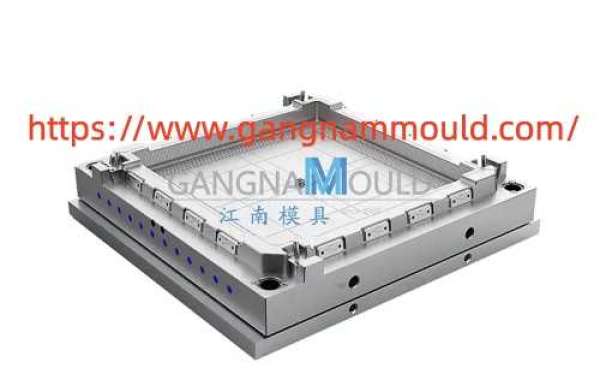
Daily Necessities Mold design can influence production costs long before manufacturing begins. For companies producing plastic household goods, personal care containers, kitchen accessories, storage products, and other everyday items, tooling decisions affect material consumption, processing time, maintenance requirements, and product consistency. A lower initial quotation does not necessarily indicate lower overall expenditure. Buyers should evaluate the complete production process, from product development and tooling construction to trial runs and routine manufacturing, to understand where costs may arise and which design choices suit their business objectives.
One important factor is product geometry. Complex shapes, decorative patterns, thin walls, and integrated structural features can increase engineering and machining requirements. A product with several undercuts or difficult release areas may require additional mechanisms in the tooling, adding to construction expenses and maintenance considerations. Simplifying unnecessary details can sometimes reduce manufacturing complexity without compromising the intended function. Buyers should work with the design team to identify which features are essential for product performance and which can be adjusted to support a more practical production plan.
Cavity configuration also deserves careful evaluation. A single cavity may involve a lower initial investment, while a multi cavity arrangement can produce several components during one molding cycle. However, increasing the cavity count may require greater machine capacity, more complex runner arrangements, and closer attention to temperature balance. The suitable configuration depends on projected demand, available equipment, component dimensions, and budget. Manufacturers should compare expected output with the complete cost of tooling and operation instead of assuming that a larger cavity count automatically improves project economics.
Cooling system design is another factor that can influence recurring expenses. During injection molding, the plastic must cool sufficiently before the component can be released. Cooling channels that distribute temperature effectively may help reduce cycle time and improve dimensional consistency. Uneven cooling can contribute to warping, shrinkage differences, and additional inspection or rework. Buyers should ask how the cooling layout will be developed for the intended geometry and material. Trial results can help determine whether the selected arrangement supports the planned production schedule.
Material selection affects both tooling construction and finished product costs. Tool steel grades differ in hardness, wear resistance, machinability, and maintenance requirements. The appropriate option depends on expected production volume, resin characteristics, surface finish, and operating conditions. Choosing a material without considering these factors may create unnecessary expenses or maintenance challenges. Buyers should request an explanation of the proposed material and how it relates to the intended application. A balanced decision considers initial investment alongside expected service requirements and the planned manufacturing workload.
Resin consumption is another area where design decisions matter. Wall thickness, reinforcing ribs, gate placement, and product geometry influence the amount of plastic required for each component. Excessive material use can increase unit costs, while walls that are too thin may cause filling difficulties or reduce structural performance. Engineering adjustments should therefore be based on product function, material behavior, and testing rather than reducing thickness without evaluation. A suitable design can balance material use with strength, appearance, and manufacturing consistency.
Production waste can also affect the overall budget. Flash, short shots, deformation, and inconsistent dimensions may lead to rejected components or additional processing. Appropriate venting, accurate machining, balanced filling, and carefully controlled processing conditions can help address potential defects. Buyers should discuss how sample testing will be carried out and which acceptance criteria will be used. Recording trial results provides useful information for refining processing parameters and identifying areas that may need design adjustments before regular production begins.
Maintenance requirements should be included in the cost assessment. Components exposed to repeated movement or friction may require periodic inspection, cleaning, lubrication where appropriate, or replacement. Accessible maintenance areas can simplify servicing, while clear documentation helps operators follow consistent procedures. Buyers should ask about recommended inspection intervals, spare component availability, and the support provided if adjustments become necessary. Planning these requirements in advance can help production teams estimate operating expenses and schedule maintenance with fewer disruptions.
The manufacturing quotation should reflect the actual project scope. Buyers should check whether engineering development, tooling construction, sample production, inspection, packaging, and delivery are included. Additional costs may arise when drawings change after approval or when testing identifies a need for modification. Sharing accurate product specifications, expected order quantities, machine details, and quality requirements helps the manufacturer prepare a more relevant proposal. Comparing quotations on the basis of included services and technical details gives purchasing teams a clearer understanding of the expected investment.
Gangnammould can be a starting point for manufacturers seeking to discuss customized tooling requirements for everyday plastic products. Before requesting a quotation, prepare product drawings, material preferences, estimated production volumes, and relevant machine specifications to help the engineering discussion focus on practical needs. You can review the companys product information and manufacturing services at https://www.gangnammould.com/product/ when evaluating possible solutions for your project. By considering design complexity, cooling performance, material use, waste reduction, and maintenance together, buyers can make informed decisions and plan production costs with greater clarity.