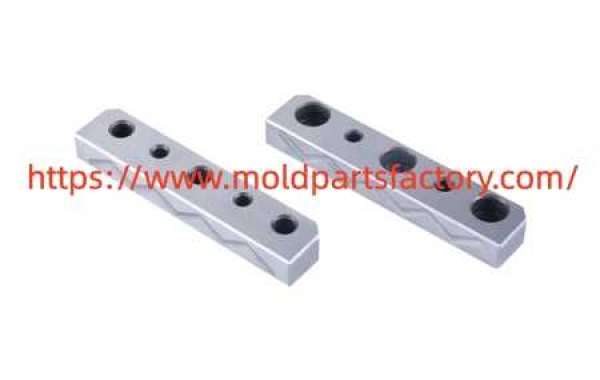
Mold Pressing Strip performance in environments marked by intense friction depends on careful material selection that balances hardness with toughness. Components face repeated contact forces that gradually remove surface layers and alter dimensional accuracy. Choosing the right base metal or composite becomes essential to keep production schedules stable and reduce unplanned stops.
Hardened tool steels remain a frequent choice because they can reach elevated Rockwell values after proper heat treatment. Grades containing chromium and vanadium form fine carbides that resist scoring when two surfaces slide against each other. These steels also retain enough ductility to absorb impact without cracking. When the application involves moderate temperatures the tempered structure stays stable and continues to support tight tolerances over thousands of cycles.
Tungsten carbide inserts offer another route for locations where abrasion rates climb higher. The combination of tungsten and carbon creates particles that rank among the hardest substances available for industrial use. Bonded with cobalt or nickel the resulting matrix withstands particle erosion and maintains edge definition longer than many steels. In practice the inserts can be brazed or mechanically locked into place so that only the contact zone carries the premium material while the body uses a more economical alloy.
Ceramic coatings applied by physical vapor deposition or thermal spray add an extra barrier on top of metallic substrates. Aluminum oxide and titanium nitride layers create low friction surfaces that limit adhesive wear. Because the coating thickness stays thin the underlying geometry remains unchanged and heat transfer characteristics stay close to the original metal. Periodic inspection still remains advisable because once the coating wears through the substrate begins to degrade at its normal rate.
Surface engineering techniques such as nitriding or carburizing further improve resistance without changing bulk chemistry. Nitrogen or carbon atoms diffuse into the outer layer and form hard compounds that raise compressive residual stresses. The treated zone typically extends a few tenths of a millimeter and provides a sacrificial skin that protects the core. When combined with a polished finish the coefficient of friction drops and heat generation during sliding decreases.
Lubrication strategies complement material choices. Dry film lubricants based on molybdenum disulfide or graphite can be applied in thin films that stay in place under moderate pressure. In closed systems circulating oils formulated with anti wear additives create a hydrodynamic film that separates the contacting faces. Even intermittent lubrication intervals can extend service intervals by reducing direct metal to metal contact.
Design details also influence longevity. Generous radii at transitions prevent stress concentrations that initiate cracks. Adequate clearance for thermal expansion avoids binding that would accelerate surface loss. Drainage paths for debris keep abrasive particles from embedding and acting as cutting tools. When these geometric features align with suitable materials the overall assembly lasts through more production runs before replacement becomes necessary.
Procurement decisions benefit from clear specifications that list required hardness ranges corrosion resistance and dimensional tolerances. Suppliers that maintain consistent melting and forming practices deliver batches with predictable behavior. Traceability documentation allows quality teams to verify chemistry and heat treatment records against the original order.
Moldpartsfactory supplies a range of components engineered for these conditions and focuses on matching material properties to the specific wear mechanisms present in each application. The company emphasizes measurable performance data rather than vague claims so that engineers can compare options on the basis of hardness toughness and documented service life under comparable loads.
Testing remains the final confirmation step. Accelerated wear trials that replicate the actual load speed and environment reveal how different candidates behave over time. Weight loss measurements surface profilometry and metallographic examination after the test provide quantitative evidence that supports the final selection. Field feedback after installation then closes the loop and informs future material upgrades.
By combining appropriate alloys coatings and design practices operators can keep high friction zones functional for extended periods. Regular monitoring of dimensional change and surface condition allows timely intervention before secondary damage spreads to mating parts. The result is steadier output and lower total cost of ownership across the production system.
Further product details appear at https://www.moldpartsfactory.com/product/ where technical data sheets and material certificates support informed decisions for ongoing tooling needs.