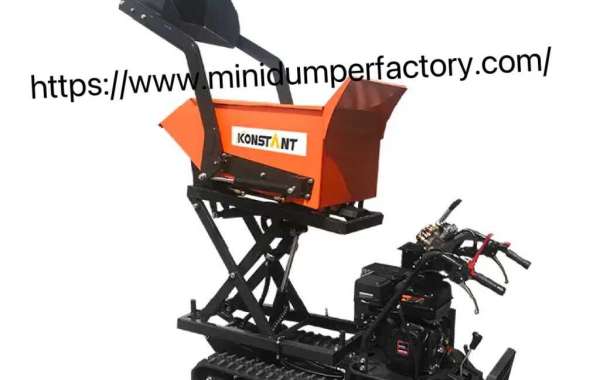
Power Barrow selection should begin with a detailed understanding of the work rather than a single capacity figure or product photograph. Construction contractors, landscaping companies, agricultural operators, and equipment distributors may handle different materials under different working conditions. Before contacting a manufacturer, buyers should consider the type of load, transportation route, unloading location, operating frequency, and available working space. These details provide a practical basis for comparing machine configurations.
Calculate the Actual Weight of Daily Loads
A common purchasing mistake is estimating requirements according to hopper volume alone. Different materials have different densities, so a full hopper of dry leaves will not have the same weight as a full hopper of gravel or wet soil.
Buyers should identify the materials they expect to transport and estimate the normal weight of each load. It is also useful to separate routine workloads from occasional heavier tasks. This helps purchasing teams compare rated capacity with actual operating needs.
For projects involving several material types, prepare a simple list showing the approximate weight and frequency of each load. Share this information with the manufacturer when requesting a quotation. It can help clarify whether a particular configuration is suitable for the intended application.
Examine the Loading Process
The way materials enter the hopper can influence machine dimensions and daily operation. Some sites rely on manual loading with shovels, while others use excavators, loaders, or other equipment.
Buyers should check the hopper opening, side height, loading height, and internal dimensions. If mechanical equipment will be used for loading, confirm that the hopper can be reached without creating unnecessary handling difficulties.
The type of material also matters. Soil, sand, stones, bricks, and construction debris may require different hopper shapes and structural arrangements. For loose materials, buyers can consider the internal surface and discharge opening. For larger solid items, the available space and side structure deserve attention.
Measure the Entire Transportation Route
Machine dimensions should be compared with the narrowest part of the working route, not just the entrance. Gates, corridors, temporary passages, turning areas, and storage doors may all affect equipment selection.
A machine that can enter a site may still have difficulty turning or reaching the loading point. Buyers should therefore measure both passage width and available turning space.
Ground conditions should be recorded as well. Concrete, asphalt, gravel, compacted soil, grass, and muddy surfaces create different operating requirements. For projects involving slopes or uneven ground, buyers should provide photographs and describe the route so that the manufacturer can review the requested configuration.
Compare Running Systems and Maneuverability
Wheeled and tracked designs serve different working environments. Wheeled configurations may suit firm surfaces and paved routes, while tracked arrangements can be considered for certain soft or irregular surfaces.
However, the choice should not be based on ground type alone. Buyers should also review machine width, turning behavior, ground contact, maintenance requirements, and the cost of replacing wear components.
For landscaping projects, surface protection may be important. For construction sites, traction and route conditions may receive greater attention. If the equipment will move between several types of ground during one working shift, explain those conditions when discussing the machine with the manufacturer.
Review the Unloading Arrangement
Loading is only half of the material handling process. Buyers should also consider where and how the load will be discharged.
Some applications require unloading into a pile, while others involve trenches, containers, garden beds, or designated collection points. The required unloading direction, discharge height, and available clearance can influence the selected hopper and tipping arrangement.
Purchasers can compare manual and hydraulic tipping configurations according to workload frequency and operator requirements. For repeated unloading throughout the day, the operating method deserves particular attention. It is also useful to ask about the tipping control, locking structure, hinge arrangement, and routine inspection points.
Check Operator Controls and Service Access
Before placing an order, buyers should review the control layout and basic operating functions. Forward and reverse movement, steering, braking, and unloading controls should be clearly identified in the product documentation.
Maintenance access is another practical consideration. Ask where routine service points are located and how operators can inspect filters, belts, hoses, lubrication points, and other components. A clear maintenance arrangement can help service teams organize routine checks.
For rental companies and contractors managing several machines, consistent control layouts and accessible service components may also simplify operator instruction and fleet management.
Confirm Production and Supply Arrangements
For importers and wholesale distributors, purchasing involves more than selecting a machine. They should confirm the agreed specifications, production schedule, inspection process, packaging method, and spare parts arrangements.
A written specification sheet should record the rated load, hopper dimensions, running configuration, engine or motor details, requested accessories, and order quantity. If customization is required, drawings and written descriptions can help both parties confirm the requested details before production begins.
Buyers should also discuss packaging dimensions, loading arrangements, shipping marks, and documentation requirements. These details can support warehouse planning and help distributors organize incoming inventory.When requesting a quotation, provide the intended application, material type, expected load, site measurements, and unloading requirements. Clear project information helps the manufacturing team review the order more accurately. minidumperfactory works with buyers seeking material handling equipment for construction, landscaping, agriculture, and related applications. To review available products, discuss configuration requirements, or make a bulk purchasing inquiry, visit https://www.minidumperfactory.com/ and contact the team with your project details.