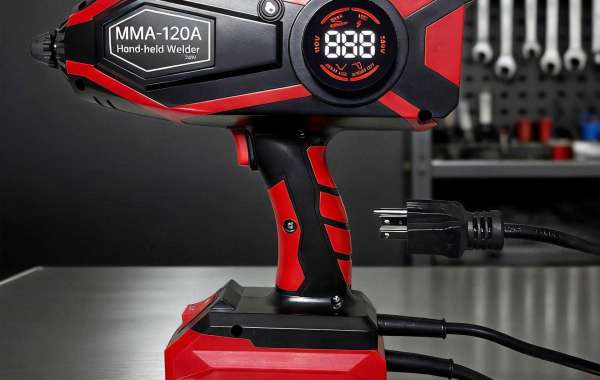
Metal fabrication often requires welding equipment that combines convenient operation, stable arc performance, and flexible application options. Whether used for workshop repairs, equipment maintenance, or small fabrication projects, a Handheld ARC Welder provides a practical solution for joining compatible metal components. When comparing a Handheld ARC Welder with other welding equipment, buyers should consider its portability, current adjustment functions, electrode compatibility, and operating requirements. Understanding these characteristics can help users select suitable equipment for different working environments and welding tasks.
Compact Design for Different Working Environments
Equipment portability is an important consideration for welders who frequently move between workstations or handle repair tasks at different locations.
A compact welding machine can be easier to transport, position, and store than larger industrial welding systems. Its smaller structure is particularly useful for maintenance workshops, construction sites, agricultural equipment repairs, and household metalworking projects.
However, portability should not be evaluated through machine dimensions alone. Buyers should also consider carrying convenience, cable arrangement, ventilation, and access to operating controls.
A well-organized design can make everyday handling more convenient while helping users prepare their equipment for different welding applications. Selecting a machine that matches the working environment can also reduce unnecessary setup difficulties.
Understanding MMA Welding Technology
Manual Metal Arc welding, commonly known as MMA or stick welding, uses an electrode coated with flux to create an electric arc between the electrode and the workpiece.
During the welding process, the electrode melts and provides filler material, while its flux coating produces protective gases and slag. These elements help protect the molten weld pool from atmospheric contamination.
One practical characteristic of MMA technology is that it does not require an external shielding gas supply. This makes the process suitable for various maintenance and fabrication environments where gas equipment may be inconvenient.
The selection of electrode type and diameter should match the base material, welding position, and machine output. Understanding these requirements helps users prepare for different metal joining applications.
AUOKVS Design and Practical Operating Features
AUOKVS offers handheld welding equipment designed for users who need a portable solution for everyday welding work.
When evaluating this type of machine, buyers should pay attention to its current adjustment range, control layout, electrode compatibility, and electrical input requirements. These specifications influence how the equipment can be used across different welding tasks.
A straightforward control arrangement can help operators adjust settings according to the selected electrode and material thickness. Clear operating instructions are also important, particularly for users who need to work with different metal components.
For distributors and welding equipment buyers, product evaluation should include both technical specifications and practical handling characteristics. This helps ensure that the selected model matches the expectations of its intended users.
Selecting Suitable Electrodes and Welding Parameters
Electrode selection has a direct influence on welding results. Different electrode classifications are designed for different materials, positions, and application requirements.
Before starting a welding task, users should check the recommended electrode diameter and current range. The machine settings should follow the electrode manufacturer's guidance rather than relying on a single setting for every application.
Other factors should also be considered:
Base material: Identify the metal type and its thickness before selecting welding consumables.
Electrode classification: Choose an electrode suitable for the material and required welding position.
Current adjustment: Set an appropriate output according to the electrode specifications.
Joint preparation: Remove rust, oil, paint, and other surface contaminants where necessary.
Workpiece positioning: Ensure that components are properly aligned and secured before welding.
Good preparation can help reduce common welding problems, including excessive spatter, poor fusion, and inconsistent weld appearance.
Maintenance and Safe Welding Practices
Regular equipment maintenance contributes to dependable operation and helps extend the useful service life of welding machinery.
Before use, operators should inspect welding cables, electrode holders, grounding clamps, connectors, and the machine housing. Damaged insulation or loose electrical connections should be addressed before the equipment is operated.
Ventilation is another important consideration because welding can produce fumes and airborne particles. Operators should use suitable respiratory protection, welding helmets, gloves, protective clothing, and other required personal protective equipment.
The machine should be operated in a dry, properly prepared working area with appropriate electrical protection. Users should also follow the manufacturer's instructions regarding duty cycle, cooling periods, and storage.
For fabrication workshops, maintenance teams, equipment distributors, and individual welders, choosing appropriate equipment involves balancing portability, welding requirements, and operational safety. A suitable machine can support a variety of metal repair and fabrication activities when used correctly. To explore more welding equipment and product information, visit https://www.auokvs.com/ .