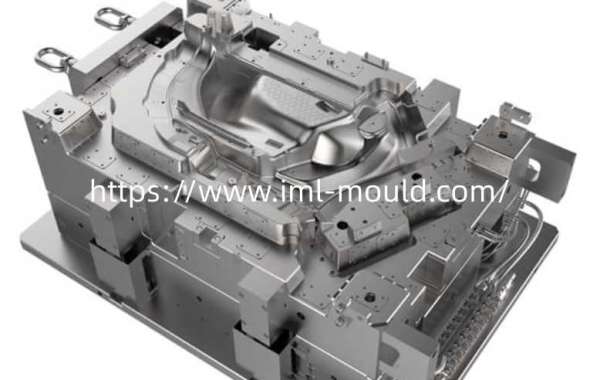
Precision Mould sourcing requires careful consideration of engineering requirements, manufacturing processes, and quality management. For overseas buyers, selecting a supplier involves more than comparing quotations or reviewing factory photographs. The production drawings, dimensional tolerances, material specifications, machining methods, and inspection procedures all need to match the intended application. A structured evaluation helps buyers understand what a manufacturer can provide and whether its proposed solution fits the project's technical and commercial requirements.
Review Drawings and Technical Requirements
Before requesting a quotation, buyers should prepare complete product drawings and relevant three-dimensional files. These documents provide the foundation for engineering review and help manufacturers understand the required geometry.
Particular attention should be given to critical dimensions, wall thickness, hole positions, surface finishes, assembly interfaces, and permitted dimensional variation. If certain features affect product installation or operation, they should be clearly identified.
A useful technical package should include:
Current 2D engineering drawings
Three-dimensional product files
Material grade and shrinkage information
Critical dimensions and tolerance requirements
Surface finish specifications
Expected production quantity
Buyers should also identify the drawing revision. Using outdated files during manufacturing can result in unnecessary modifications and project delays.
Examine the Proposed Material Selection
Material selection influences machining behavior, wear resistance, corrosion resistance, polishing, and maintenance requirements. Different applications may require different steel grades depending on production volume, resin characteristics, surface appearance, and operating conditions.
Rather than choosing a material based only on its name or price, buyers should ask the manufacturer to explain the proposed selection.
Important questions include:
Which steel grade is planned for each major component?
Is heat treatment required?
What hardness range is specified?
Are corrosion-resistant materials necessary?
Can replacement inserts be supplied when needed?
A clear material specification makes quotations easier to compare. It also provides a useful reference for future maintenance and component replacement.
Evaluate Machining Equipment and Manufacturing Processes
The production process determines how engineering drawings are translated into physical components. Buyers should understand which machining methods are used and how the manufacturer manages dimensional requirements at different stages.
Common operations include CNC milling, electrical discharge machining, grinding, drilling, and polishing. Each process serves a different purpose. CNC machining handles complex geometries, while EDM can produce detailed features that may be difficult to achieve through conventional cutting.
When evaluating a manufacturer, ask about:
Available CNC and EDM equipment
Machining accuracy and inspection methods
Operator experience with complex structures
Component fitting and assembly procedures
Surface finishing and polishing arrangements
Equipment information is useful, but actual inspection records and examples of comparable projects provide additional evidence of manufacturing capability.
Check Tolerance Control and Inspection Methods
Dimensional accuracy should be evaluated according to the function of each feature. Not every dimension requires the same tolerance, and unnecessarily restrictive requirements may increase manufacturing costs without improving product performance.
Buyers should identify critical-to-function dimensions and agree on suitable measurement methods before production begins.
Depending on the component, inspection may involve coordinate measuring machines, optical measurement equipment, gauges, microscopes, or dedicated checking fixtures.
A supplier should be able to explain:
Which dimensions are considered critical.
How each feature will be measured.
What inspection equipment will be used.
How measurement results will be recorded.
What corrective action will follow if results fall outside the agreed range.
Requesting an inspection report with actual measurement results helps buyers assess whether the manufacturing process follows the approved drawings.
Understand the Importance of Design Review
A detailed design review can identify manufacturing difficulties before machining begins. Issues involving draft angles, parting lines, cooling channels, gate positions, venting, and ejection structures may influence production performance.
For example, an unsuitable ejection arrangement can leave visible marks or make part removal difficult. Poor cooling distribution may contribute to dimensional variation or extended cycle times.
Buyers should ask whether the engineering team reviews the product design before preparing the final manufacturing plan. Design for manufacturability discussions can also identify opportunities to simplify structures, improve accessibility, and make future maintenance more manageable.
This stage is particularly useful when a project includes complex geometries, thin sections, small features, or multiple interacting components.
Request Trial Samples and Acceptance Records
A completed manufacturing project should be evaluated through practical testing rather than appearance alone. Trial samples provide an opportunity to compare actual results with the approved technical requirements.
Depending on the application, the acceptance process may cover:
Critical dimensions and geometric tolerances
Surface appearance and finish
Component fit and assembly performance
Repeated operation and movement
Cooling and ejection performance
Consistency between trial samples
Buyers should agree on sample quantities, inspection responsibilities, and acceptance criteria before the trial. Documenting adjustments and test results also helps both parties understand the project's progress.
Consider Communication and Long-Term Support
International manufacturing cooperation requires clear communication throughout the project. Buyers should understand who handles engineering questions, drawing revisions, inspection reports, delivery coordination, and technical support.
At iml-mould, project discussions can begin with product drawings, material requirements, dimensional specifications, and estimated production quantities. Sharing these details allows the team to review the application and discuss an appropriate manufacturing plan.
Before confirming an order, buyers should clarify delivery arrangements, maintenance guidance, spare-part availability, and procedures for handling future design changes. These points are particularly relevant when the equipment will operate at a different facility after delivery.When comparing manufacturers, consider the complete process from initial engineering review to final inspection and technical assistance. A clearly defined project scope helps both parties manage expectations and coordinate production activities. Buyers looking for customized manufacturing solutions can review the available product and service information at https://www.iml-mould.com/ and contact iml-mould to discuss drawings, specifications, and project requirements.