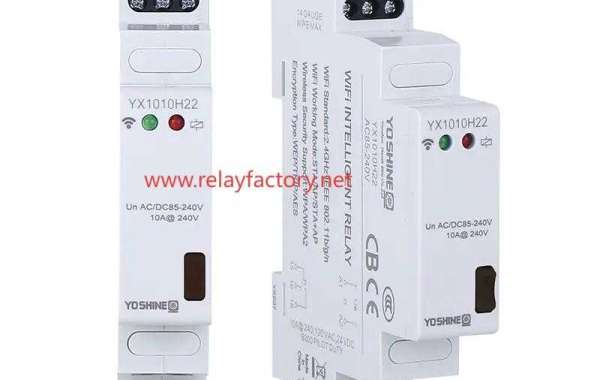
Custom Time Relay selection requires careful consideration of electrical specifications, operating functions, installation conditions, and equipment compatibility. For industrial equipment manufacturers, distributors, and electrical component buyers, selecting an appropriate timing device involves more than comparing product dimensions or quotations. Understanding the actual application helps buyers communicate their expectations clearly and work with manufacturers to determine suitable configurations.
Identify the Required Operating Function
Before requesting a quotation, buyers should identify how the device will operate within the electrical control system. Different machines require different switching sequences, depending on their working principles and operating conditions.
Common functions include on-delay, off-delay, interval operation, cyclic control, and programmable switching sequences. Each function supports a particular control purpose.
For example, an on-delay function introduces a waiting period before an output becomes active. An off-delay function allows an output to remain active for a specified period after the input signal changes.
Buyers should explain the complete operating process rather than simply requesting a particular delay setting. Information about starting conditions, output actions, and reset requirements gives manufacturers a clearer understanding of the intended application.
Confirm Voltage and Contact Requirements
Electrical compatibility is an important part of product evaluation. Buyers should specify the required supply voltage and identify whether the application uses alternating current or direct current.
Output contacts also require careful consideration. Relevant specifications include contact configuration, rated voltage, switching current, and connected load characteristics.
For equipment involving motors, contactors, pumps, or solenoid valves, buyers should provide information about the connected components. Inductive loads may require different switching considerations compared with resistive loads.
It is also useful to confirm terminal arrangements and wiring methods before ordering. These details help determine whether the proposed configuration can be integrated into the existing control circuit.
Determine the Required Timing Range
Different applications may require short intervals, extended delays, or several operating stages. Buyers should identify the minimum and maximum settings needed for their equipment.
Adjustment methods should also be considered. Depending on the product design, users may prefer rotary controls, switches, or other setting arrangements.
Another factor is adjustment accuracy. Buyers should discuss the required tolerance and setting resolution with the manufacturer, particularly when the equipment depends on coordinated switching operations.
Providing practical operating examples can make technical discussions more productive. For instance, buyers can explain how long a machine should wait before activating another component and what should happen when the input signal is interrupted.
Examine Installation Conditions
A product must fit the physical and electrical structure of the intended equipment. Buyers should check available mounting space, housing dimensions, terminal positions, and wiring access.
For control cabinet applications, installation arrangements may affect maintenance convenience and electrical connections. Buyers developing new equipment should consider these details during the initial design stage.
Environmental conditions also deserve attention. Temperature, humidity, vibration, and dust exposure can influence the product specifications required for different working environments.
Sharing installation drawings, photographs, or information about existing components can help manufacturers assess compatibility before recommending a configuration.
Discuss Customization Possibilities With Manufacturers
When standard product configurations do not correspond with a project, buyers may need to discuss specific adjustments.
Potential customization subjects include operating functions, voltage options, contact arrangements, housing dimensions, terminal structures, labels, and packaging. The availability of these options depends on the product design and manufacturing capabilities.
As a manufacturer, relayfactory places importance on understanding customer requirements before production begins. Buyers should prepare a specification list and distinguish between essential technical conditions and optional preferences.
It is also advisable to discuss sample availability, production schedules, inspection arrangements, and documentation. Clear communication at this stage helps both parties establish practical expectations and coordinate the ordering process.
Evaluate Inspection Procedures and Product Documentation
Quality control should be included in the purchasing evaluation. Buyers can ask how materials are checked, how assembly processes are managed, and what inspections are performed on finished products.
Depending on the product model and order requirements, relevant documentation may include electrical specifications, wiring diagrams, operating instructions, and inspection records.
For distributors and equipment manufacturers, consistent product identification is also useful for inventory management and after-sales communication.
A supplier should be able to explain the relevant product parameters clearly and respond to reasonable technical questions. Buyers can use these discussions to evaluate whether the proposed product corresponds with their project requirements.
Compare Suppliers Using Clear Purchasing Criteria
Price is only one part of a purchasing decision. Buyers should also consider product specifications, customization communication, production arrangements, delivery conditions, and technical support.
Preparing a comparison sheet can make supplier evaluation more organized. Useful items include supply voltage, contact ratings, operating functions, adjustment methods, installation dimensions, inspection arrangements, and commercial terms.
Expected order quantities and future purchasing plans should also be communicated. This information allows manufacturers to discuss production arrangements according to the project's actual needs.For companies sourcing industrial control components, detailed technical communication can help reduce misunderstandings during purchasing and production. relayfactory provides product information and manufacturing support for customers evaluating different control applications. Buyers interested in product specifications, customized configurations, or potential business cooperation can visit https://www.relayfactory.net/ to review the company's product range and contact the manufacturer with their project requirements.