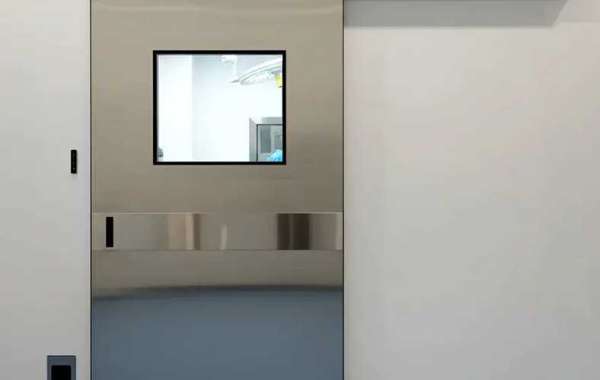
An Airtight Door does a job that is easy to miss because success often means nothing dramatic happens. The door closes, the panel meets its frame, and unwanted air movement is reduced. In rooms that depend on controlled indoor conditions, that simple action can become an important part of the overall space.
Unlike an ordinary interior door, an Airtight Door is designed around the relationship between the door panel and its surrounding frame. Sealing strips are positioned around contact areas to limit gaps after closure. The threshold, hinges, locking mechanism, and frame geometry all contribute to how closely the door fits.
The reason for choosing this type of door depends on the room. Laboratories, clean production areas, medical spaces, food-processing rooms, temperature-controlled facilities, and certain industrial zones may require separation between areas with different air conditions. A suitable door helps create a clearer boundary between those spaces.
Door movement also affects sealing performance. A panel that closes at an angle may not compress the gasket evenly. For this reason, frame accuracy and hardware positioning matter during installation. Some designs use adjustable hinges or specialized closing mechanisms to help the panel return to a consistent position.
The gasket itself deserves attention. Different sealing materials can be selected according to temperature range, chemical exposure, flexibility requirements, and expected operating conditions. A soft gasket can compress against the frame, creating a contact line around the door perimeter. The shape of that contact area influences how air can pass through the closed assembly.
An Airtight Door can also be designed for different traffic patterns. A small single-leaf door may suit a personnel entrance, while wider configurations can accommodate carts or equipment. Sliding versions may be considered when swing space is restricted. The choice depends on room layout and the movement taking place around the entrance.
Visibility is another design question. Some doors include viewing windows so users can check the other side before opening. Window size, frame structure, and sealing details need to be coordinated so the viewing section does not create an unintended weak point in the door assembly.
An Airtight Door is therefore more than a solid panel filling an opening. Its performance depends on several small details working together: frame geometry, gasket compression, hardware, threshold design, and closing action. When those elements are considered as one system, the door can create a controlled physical boundary between two spaces.